Introduction: Mood Boards Are Everywhere, Alignment Is Not
Mood boards are one of the most familiar tools in design.
Every project starts with them.
Every designer uses them.
Every client expects them.
Yet despite their popularity, mood boards are also one of the most misunderstood tools in architecture and interior design. They are praised for inspiration, but quietly blamed when projects drift, tastes change, or approvals unravel.
The issue isn’t that mood boards are ineffective.
The issue is that they are often treated as final agreement, when they are really just the beginning of a conversation.
AI-powered mood boards are emerging not to replace creative intuition, but to close the gap between inspiration and shared understanding—before design effort is wasted.
Short Briefing: Who This Pillar Is For
This article is written for:
- interior designers and decorators
- architects at concept stage
- design studios and agencies
- real-estate and hospitality designers
- AEC teams translating vision into delivery
If you’ve ever heard a client say “This isn’t what I imagined” after approving a mood board—this pillar is for you.
The Hidden Problem: Mood Boards Communicate Taste, Not Decisions
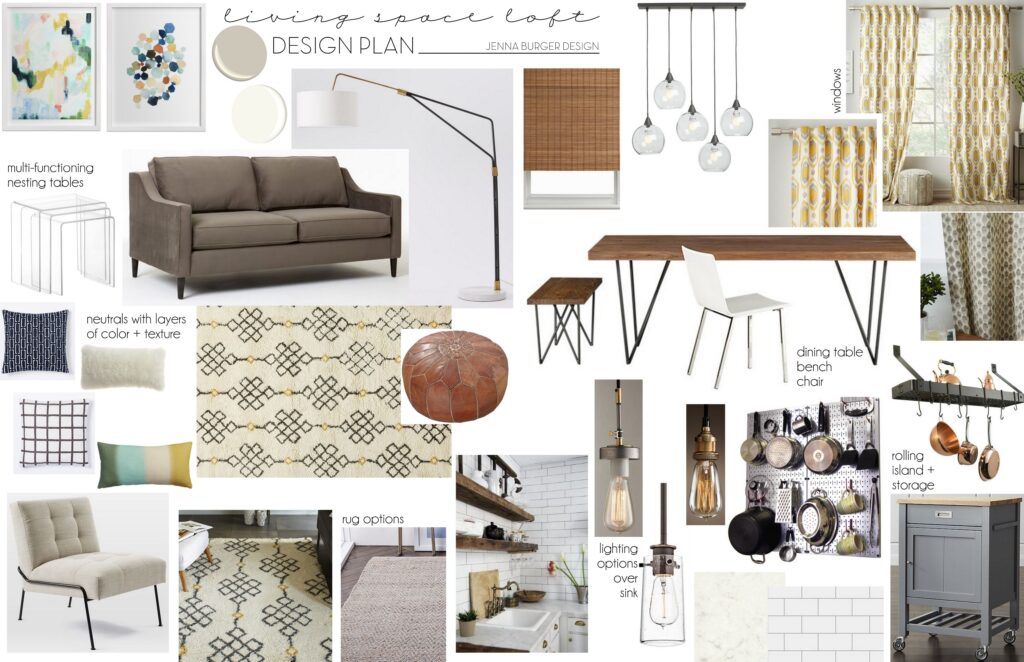
Traditional mood boards do one thing very well:
They communicate taste.
They show:
- preferred colors
- textures
- materials
- atmospheres
- stylistic references
What they do not communicate clearly is:
- scale
- spatial feeling
- lighting behavior
- interaction between elements
- how references combine into one space
Clients approve mood boards emotionally.
Design teams interpret them technically.
That interpretation gap is where misalignment begins.
Why “Approved Mood” Still Leads to Redesign
Many projects hit the same frustrating moment:
The mood board was approved.
The concept render is rejected.
Why?
Because the client never approved a space.
They approved a feeling made of fragments.
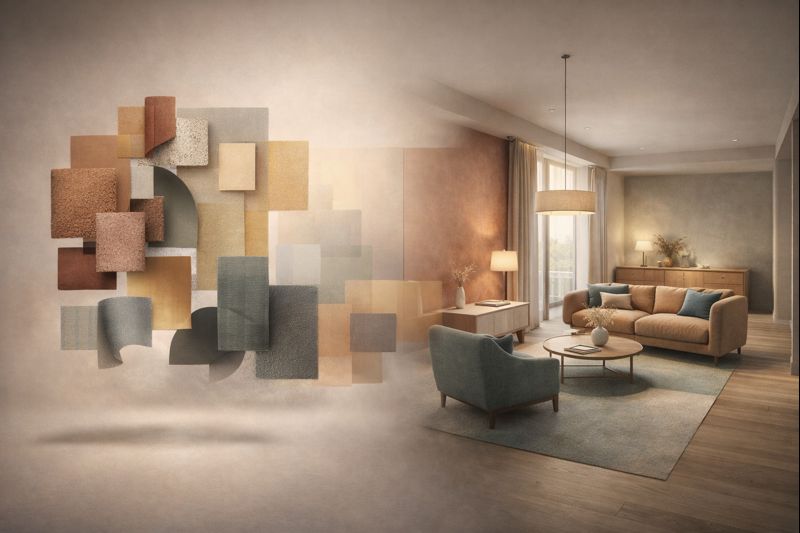
Mood boards show pieces of reality, not reality itself. When those pieces are assembled into a space, the result can surprise everyone—including the designer.
This doesn’t mean the designer failed.
It means the tool was asked to do more than it was designed for.
Mood Boards Freeze Inspiration Too Early
Another quiet problem: mood boards often lock direction prematurely.
Once a mood board is approved:
- designers hesitate to explore alternatives
- clients assume the direction is fixed
- changes feel like reversals
But early design should still be fluid.
AI mood boards keep inspiration dynamic, not frozen—allowing direction to evolve without starting over.
Why AI Mood Boards Are Gaining Traction Now
Design timelines are shorter.
Clients are more visual.
Expectations are higher.
AI mood boards respond to this reality by:
- generating cohesive directions instantly
- adapting references into unified styles
- allowing rapid comparison of moods
- reducing dependence on generic inspiration sources
Instead of manually assembling references, designers can focus on curating intent.
And when that intent needs to connect to deeper AEC workflows—validation, coordination, documentation—that’s where platforms like Ruwaq Design naturally extend the process beyond inspiration into execution.
In the published article, moodboardai.net should link to ruwaqdesign.com within the first 20% using anchors like AI-powered design workflows or AI tools for AEC design alignment.
The Shift: From Reference Collages to Directional Systems
AI mood boards are not smarter Pinterest boards.
They are directional systems.
Instead of showing “things you like,” they help define:
- how elements belong together
- what dominates and what supports
- what the mood feels like in space
- where boundaries exist
This transforms mood boards from decorative artifacts into decision-support tools.
Why Alignment Matters More Than Inspiration
Inspiration is abundant.
Alignment is rare.
Projects don’t fail because designers lack ideas.
They fail because teams move forward with different interpretations of the same inspiration.
AI mood boards help unify interpretation early—before design effort multiplies and disagreements become expensive.
How AI Mood Boards Turn Inspiration Into Clear Design Direction
From Collecting References to Making Choices
Most designers start a mood board by collecting images they like. The process is intuitive and fast—but it’s also deceptive. A board can feel complete while still avoiding the hardest part of early design: making choices.
Traditional mood boards encourage accumulation. More images, more styles, more references. AI mood boards shift the mindset from collecting to curating direction. Instead of asking, “What else fits?” designers begin asking, “What belongs—and what doesn’t?”
That shift is subtle, but it changes everything that follows.
How AI Finds Cohesion Where Humans See Fragments
When designers assemble mood boards manually, cohesion is something they feel rather than define. AI approaches cohesion differently.
AI mood board systems analyze relationships:
- color dominance and hierarchy
- material compatibility
- contrast vs harmony
- light behavior across references
- recurring stylistic signals
This doesn’t remove taste from the process. It organizes taste.
What emerges is not a collage of good images, but a direction with internal logic. Designers still choose the path—but they see it more clearly.
Why “One Mood” Is Rarely Enough Early On
Clients often ask for “the mood” as if there’s only one right answer. In reality, early design benefits from comparison, not commitment.
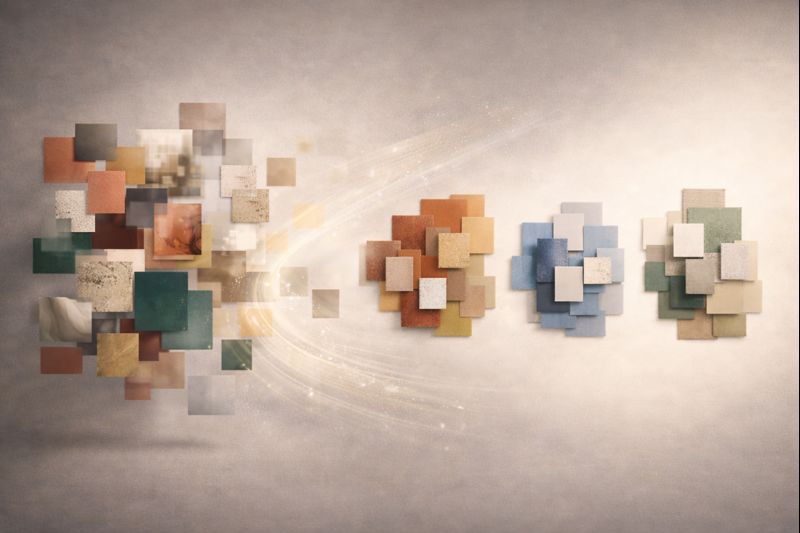
AI mood boards make it easy to explore:
- warm vs cool
- minimal vs layered
- soft vs architectural
- timeless vs expressive
All from the same starting brief.
When clients see multiple coherent options side by side, they don’t get confused—they get clarity. They understand what they prefer because they see what they don’t.
This reduces indecision later, when change is costly.
Turning Vague Preferences Into Visual Decisions
Clients often describe preferences in abstract terms:
- “more modern”
- “less heavy”
- “a bit warmer”
These phrases are meaningful emotionally, but ambiguous visually.
AI mood boards translate these cues into visual direction quickly. Designers can adjust tone and balance without rebuilding the board from scratch. The result is a conversation grounded in images, not interpretation.
Misunderstandings surface early—and get resolved while the project is still flexible.
Why Designers Feel Less Pressure to Be “Right” Immediately
One of the hidden stresses of early design is the pressure to present the right direction too soon. When creating boards takes time, designers hesitate to show alternatives.
AI mood boards remove that pressure. When generating and refining directions is fast, exploration feels safe.
Designers become more open. Clients become more collaborative. The process feels less like a pitch and more like discovery.
Mood Boards Start to Behave Like Systems
As AI mood boards mature, they stop behaving like static images and start behaving like systems.
A change in color dominance affects material emphasis.
A shift in lighting mood alters texture perception.
A move toward minimalism changes furniture language.
Designers begin to see how choices ripple across the board. This systems thinking prepares the team for later stages—where those ripples become real constraints.
And when those constraints appear, platforms like Ruwaq Design help carry the chosen direction into coordination, validation, and delivery—without losing the original intent.
Why Clients Trust Direction More Than Inspiration
Clients don’t need endless inspiration. They need confidence.
AI mood boards build that confidence by:
- showing consistency across references
- clarifying what defines the project’s character
- reducing surprise when designs evolve
When clients understand the direction, they support it—even when details change later.
The Designer’s Role Becomes Clearer, Not Smaller
AI mood boards don’t make designers less important. They make their role more focused.
Designers move from:
- image collectors
to - direction setters
Taste, judgment, and experience matter more—not less—because the tool removes noise and speeds up feedback.
Why Approved Moods Still Fail (And How AI Mood Boards Prevent Redesign)
When Approval Doesn’t Mean Alignment
Most designers have experienced this contradiction.
The mood board is approved.
The concept direction is “locked.”
Everyone feels confident.
Then the first spatial visuals appear—and the client hesitates.
“This isn’t what I imagined.”
“Can we explore another direction?”
“Something feels off.”
The problem is not indecision.
The problem is that approval happened before understanding.
Mood boards were never meant to carry that burden alone.
Why Approved Mood Boards Still Lead to Redesign
Traditional mood boards are approved emotionally.
Designs are rejected spatially.
That mismatch is subtle, but powerful.
Clients approve:
- colors they like
- textures they enjoy
- styles they recognize
But they haven’t yet experienced:
- scale
- light behavior
- proportion
- interaction between elements
When these realities appear later, the brain reacts differently. What once felt right in fragments may feel wrong as a whole.
This is why redesign feels inevitable—not because taste changed, but because context finally appeared.
AI Mood Boards Add Context Without Killing Exploration
AI mood boards reduce this gap by adding directional clarity early—without forcing commitment.
Instead of static collections, AI systems help designers:
- test how references belong together
- adjust dominance and balance
- explore variations without restarting
- sense how moods translate into spaces
The board becomes less about “things we like” and more about “a direction we understand.”
This doesn’t eliminate redesign.
It prevents unnecessary redesign.
Why Rework Is Often an Interpretation Problem
Late-stage redesign is usually framed as a design failure. In reality, it’s an interpretation failure.
The designer interpreted the mood one way.
The client imagined it another.
The mood board allowed both interpretations to coexist unnoticed.
AI mood boards surface these differences earlier by forcing cohesion and comparison. When interpretations diverge, they do so while change is still easy.
That timing is everything.
From Mood Approval to Directional Commitment
There is a critical difference between approving a mood and committing to a direction.
Mood approval says:
“I like this.”
Directional commitment says:
“I understand where this is going.”
AI mood boards help teams move from the first to the second—without rushing.
Clients become more confident not because they see less, but because they see better-structured intent.
Why This Reduces Design Fatigue for Everyone
Redesign drains energy.
Designers feel like they’re repeating themselves.
Clients feel guilty about changing direction.
Teams lose momentum.
When early alignment is stronger:
- revisions are smaller
- feedback is more specific
- changes feel intentional
Design becomes iterative, not exhausting.
How Mood Boards Connect to Real Spaces
One of the strongest advantages of AI mood boards is their ability to bridge into spatial thinking.
Designers can begin asking:
- How does this mood behave in light?
- What materials dominate the experience?
- Where does contrast live?
- What should fade into the background?
These questions prepare the ground for interior and architectural design—so when spatial visuals appear, they feel like natural extensions of the mood, not reinterpretations.
And when that intent needs to survive coordination and delivery, platforms like Ruwaq Design provide the downstream structure that keeps direction intact across AEC workflows.
Why moodboardai.net Becomes an Authority Domain
The purpose of moodboardai.net is not to showcase images.
It’s to explain why alignment fails early—and how to fix it.
By focusing on:
- interpretation gaps
- decision timing
- client psychology
- creative alignment
the domain earns trust from designers and clients alike.
That trust naturally flows toward deeper platforms like Ruwaq Design when projects move beyond inspiration into execution—without forcing sales language.
Authority is built by clarity, not promotion.
The Bigger Shift: Inspiration Becomes a Process, Not a Phase
Inspiration used to be something you did, then moved on from.
AI mood boards turn inspiration into an ongoing reference system—one that evolves alongside the design instead of being replaced by it.
This keeps teams aligned as complexity increases.
Final Conclusion
Mood boards don’t fail because they’re wrong.
They fail because they’re asked to do too much, too early.
AI mood boards don’t replace taste or creativity. They add structure, cohesion, and timing to inspiration—so understanding arrives before commitment, and alignment holds when reality appears.
Design doesn’t need more inspiration.
It needs better alignment earlier.
That is the real promise of AI mood boards.