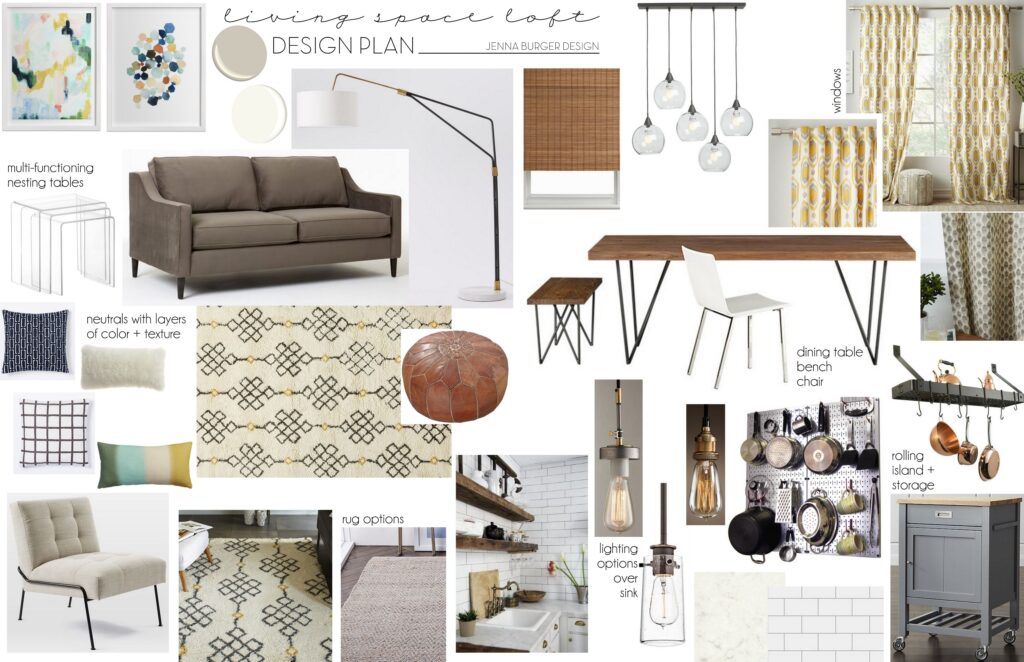
Introduction: The Moment a Mood Board Meets Reality
Every design project reaches a moment when inspiration has to become real.
The mood board that once felt clear and exciting now has to translate into:
- spatial proportions
- lighting behavior
- material scale
- real-world constraints
This is often where tension appears. What felt aligned on a board suddenly feels uncertain in space. Designers feel pressure to “make it work,” clients feel surprised, and the project enters a cycle of adjustment.
This article explores why that moment is so fragile—and how early alignment, not better visuals, determines whether design intent survives the transition.
Mood Boards Are Interpretive by Nature
Mood boards are not instructions. They are interpretations.
They rely on the viewer to imagine:
- how elements combine
- what dominates visually
- how light interacts with materials
- how references scale up
Different people imagine different outcomes from the same board. Designers fill in gaps with experience. Clients fill them with expectations.
Neither is wrong. But unless those interpretations align early, conflict is inevitable later.
Why Spatial Reality Feels Like a Shock
When the first spatial visuals appear—renders, models, or mockups—they introduce information that mood boards cannot:
- proportion
- depth
- enclosure
- brightness
- density
This new information forces the brain to reassess earlier assumptions. If those assumptions were never aligned, the reaction feels like a change of mind—even when it’s really a correction of understanding.
This is why clients say, “This isn’t what I imagined,” even after approving the mood.
Early Alignment Is About Shared Mental Models
Successful projects don’t just share inspiration. They share mental models.
A shared mental model means:
- everyone imagines the same outcome
- trade-offs are understood
- priorities are agreed upon
- compromises are anticipated
Mood boards alone rarely create this. They start the conversation but don’t finish it.
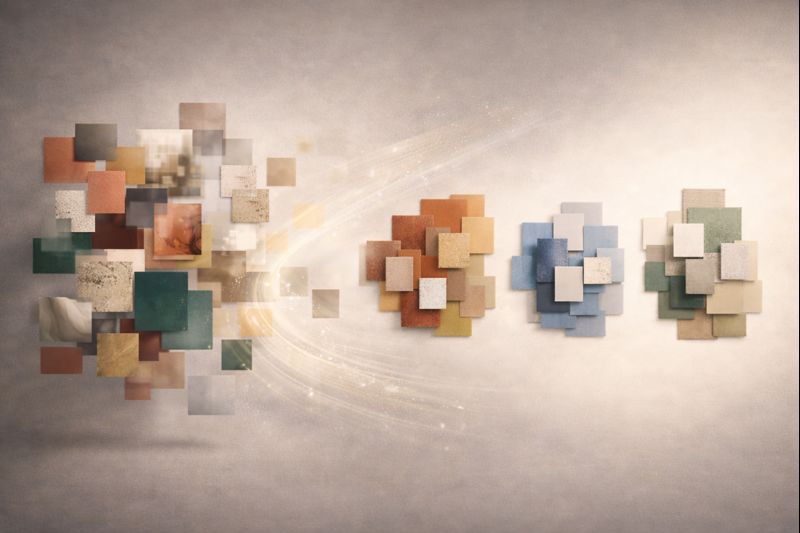
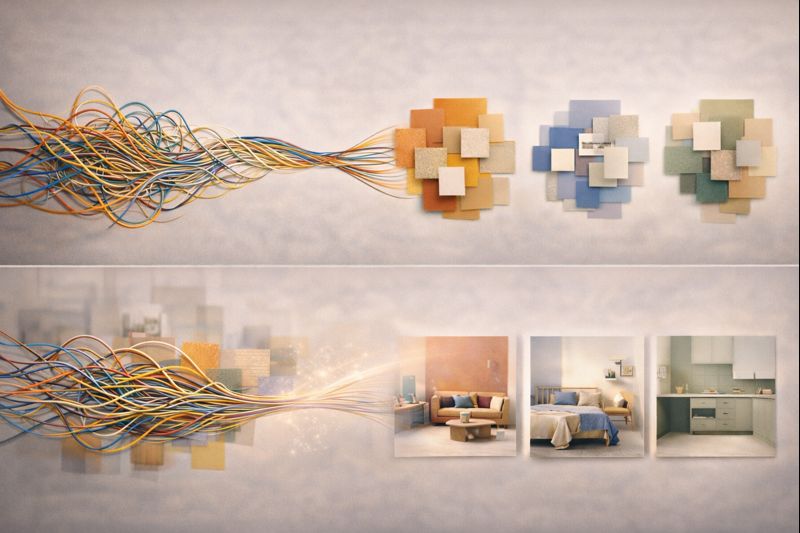
AI mood boards help by turning inspiration into directional clarity—reducing interpretive gaps before spatial design begins.
How AI Mood Boards Prepare Teams for Reality
AI mood boards add value not by being more beautiful, but by being more coherent.
They help teams:
- establish hierarchy (what leads, what supports)
- test contrast and dominance
- explore alternatives intentionally
- reduce ambiguity before design effort multiplies
This prepares both designers and clients for the realities that follow. When spatial visuals appear, they feel like confirmations—not surprises.
Why Designers Lose Less Intent When Alignment Comes Early
Design intent is most vulnerable during transition—when concepts become drawings, and drawings become construction.
When early alignment is strong:
- designers spend less time defending ideas
- coordination focuses on solutions, not reinterpretation
- compromises are strategic, not accidental
Intent doesn’t disappear. It adapts with awareness.
And when projects move beyond inspiration into coordination and delivery, platforms like Ruwaq Design support that continuity—connecting early direction to AEC workflows where intent must survive complexity.
Clients Feel More Secure When They Understand the Journey
Clients don’t need to control every decision. They need to trust the direction.
When early alignment exists:
- clients remember why they chose a direction
- later adjustments feel consistent, not contradictory
- confidence holds under pressure
This reduces late-stage doubt, which is often the real driver of redesign.
Alignment Is a Process, Not a Moment
Design alignment doesn’t happen at approval.
It happens through progressive understanding.
AI mood boards support this by:
- keeping direction flexible early
- clarifying intent before commitment
- reducing the gap between idea and outcome
The goal is not to lock decisions too soon—but to ensure decisions, when made, are meaningful.
Conclusion: Design Succeeds When Understanding Comes First
Mood boards are powerful—but only when they lead to shared understanding.
Projects fail not because inspiration was wrong, but because alignment arrived too late. AI mood boards help teams align earlier by structuring inspiration into direction—so when design becomes real, it feels familiar, not foreign.
Design success isn’t about perfect boards.
It’s about clear alignment before complexity begins.